Something isn’t working the way it should.
Maybe your training exists but isn’t landing — completion rates are low, learners aren’t transferring skills to the workplace, or satisfaction scores don’t reflect the investment you’ve made. Maybe your platform is limiting you — too expensive, too rigid, or too difficult for your team to maintain. Maybe you have content that’s performing well in one format and you know it could reach more people in other modes, on other platforms, but you’re not sure how to get there. Or maybe you’re earlier in the process — you know you need a learning or performance support system, but you’re not sure what to build, what to buy, or where to start.
These are all problems I solve.
What I bring to diagnostic and strategic work
I’m a consultant who also builds and leads. That combination matters because it means my recommendations are grounded in implementation reality — I know what things actually cost, how long they take, what breaks under pressure, and where the highest-leverage improvements tend to hide. I’m not going to hand you a strategy deck full of recommendations that sound elegant but can’t survive contact with your actual systems, team, and budget.
My approach starts with listening and structured assessment. I look at your current state — systems, content, workflows, learner journeys, data — and map it against your goals. I identify the gaps, the friction points, and the opportunities. Then I give you a clear, prioritized path forward: what to fix first, what to invest in or set aside, what opportunities may have been missed, and what your optimum outcomes are.
What “Solve it” looks like in practice
- Learning system assessment — I conduct structured evaluations of existing LMS platforms, course catalogues, and delivery systems, assessing them against accessibility standards, UX best practices, learner engagement metrics, and your strategic objectives. You get a clear picture of where you are, where the problems lie, and how to solve them.
- Platform strategy and selection — If you’re choosing a new platform, migrating from an existing one, or wondering whether what you have can be made to work better, I bring hands-on experience across multiple LMS and delivery platforms. My recommendations are based on your actual requirements, not vendor relationships.
- Content repurposing and expansion — You’ve invested in content that works. I help you identify how to extend its reach — adapting courses for new platforms, new audiences, new delivery modes, or new markets — without starting from scratch.
- Learning strategy and programme design — For organizations building or rethinking their learning function, I provide strategic consulting on programme architecture, technology choices, learner journey design, and measurement frameworks. I help you connect learning investments to business outcomes and build systems that can evolve as your needs change.
- AI readiness and integration — I help organizations assess where AI-driven tools — tutors, chatbots, knowledge retrieval systems, workflow automation — can genuinely improve their learning and performance support, and where they’re not yet worth the investment.
- Institutional assessment and cost reduction — Sometimes the problem isn’t the learning itself but the systems around it. For a university college, I assessed their student information systems and identified that an open-source CRM could replace their existing commercial system at a saving of $40,000 per year — then implemented the replacement. Not every consulting engagement needs to be about content; sometimes the “snick” is operational.
Why the heart? There is a difference between work done with passion and commitment, and work done ‘merely’ to professional standards: I care about the work I do in a deeply personal way that inspires me to go that extra mile, every time.
Projects
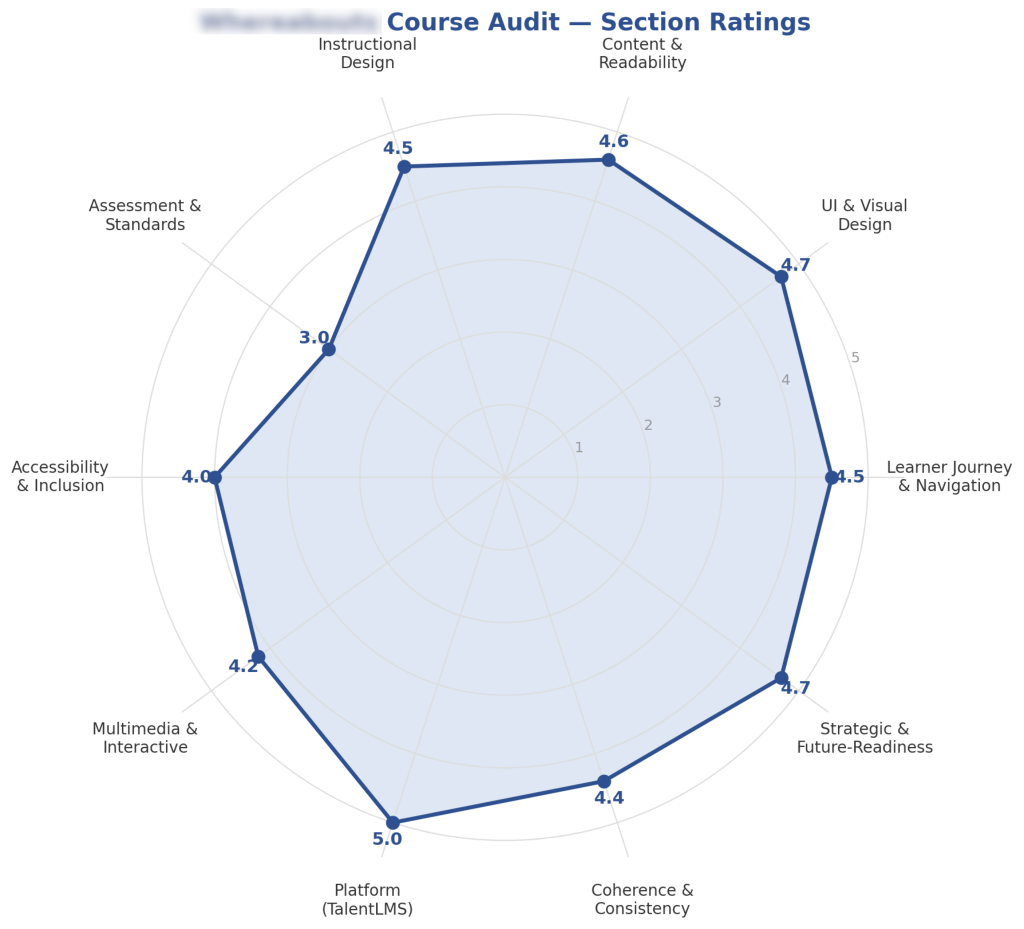
Current Project: An international training institute is launching a flagship course for a global youth audience. They need fresh eyes on the project, backed by sound research techniques, to bring the course up to the highest UDL 3.0 standards.
Portfolio: Non-profit organizations share a challenge — sustaining the operational web and systems lifecycle support they need after project funds cease. I designed an innovative cooperative support model that solved the problem collectively.
Portfolio: The AI Positioning Matrix. Our stance towards AI influences what we can and cannot accomplish as it transforms our world. The AI Positioning Matrix helps individuals explore their relationship to AI through a simple and engaging tool designed for the Humans + AI Community.